Can WAAM Parts Be Certified? Standards & Qualification Guide | MX3D
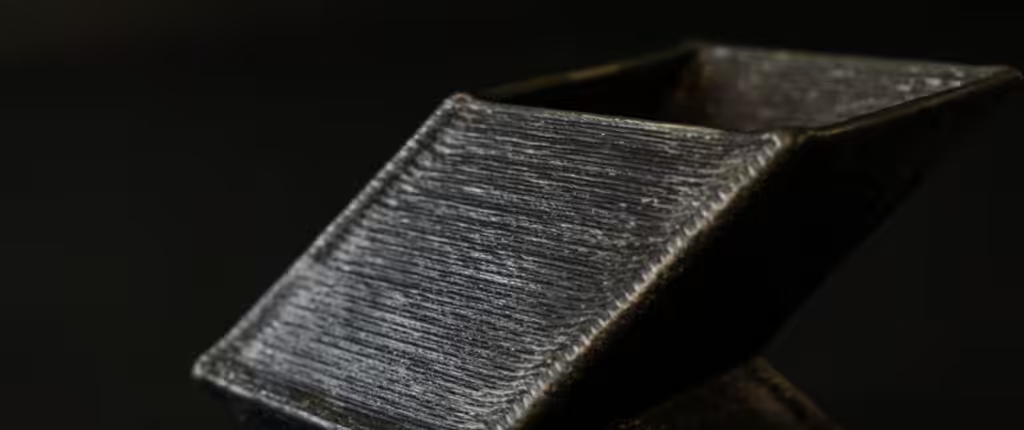
Key findings Certified per part: WAAM part certification is typically done per part or per application, not as a blanket approval. Frameworks include DNV, Lloyd’s Register and TÜV for maritime and offshore, ASME Section IX for welding, and API 6A/17D for oil and gas. Audited facility: MX3D is ISO 9001 certified by DNV, and LRQA […]
BMW GROUP
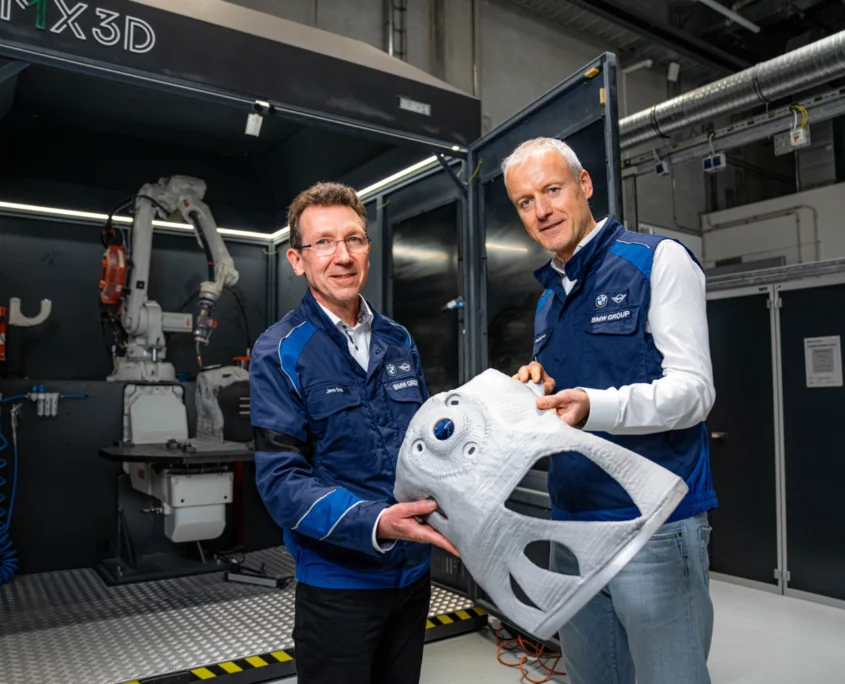
MX3D is proud to share that BMW Group employed their M1 Metal AM System and proprietary software MetalXL to 3D print automotive components. BMW Group demonstrates how additive manufacturing, specifically wire arc additive manufacturing (WAAM), can provide valuable solutions for an industry such as automotive. Their engineers succeeded in proving that it is possible to […]
How Is 3D Printing Transforming Automotive Spare Parts and Tooling?
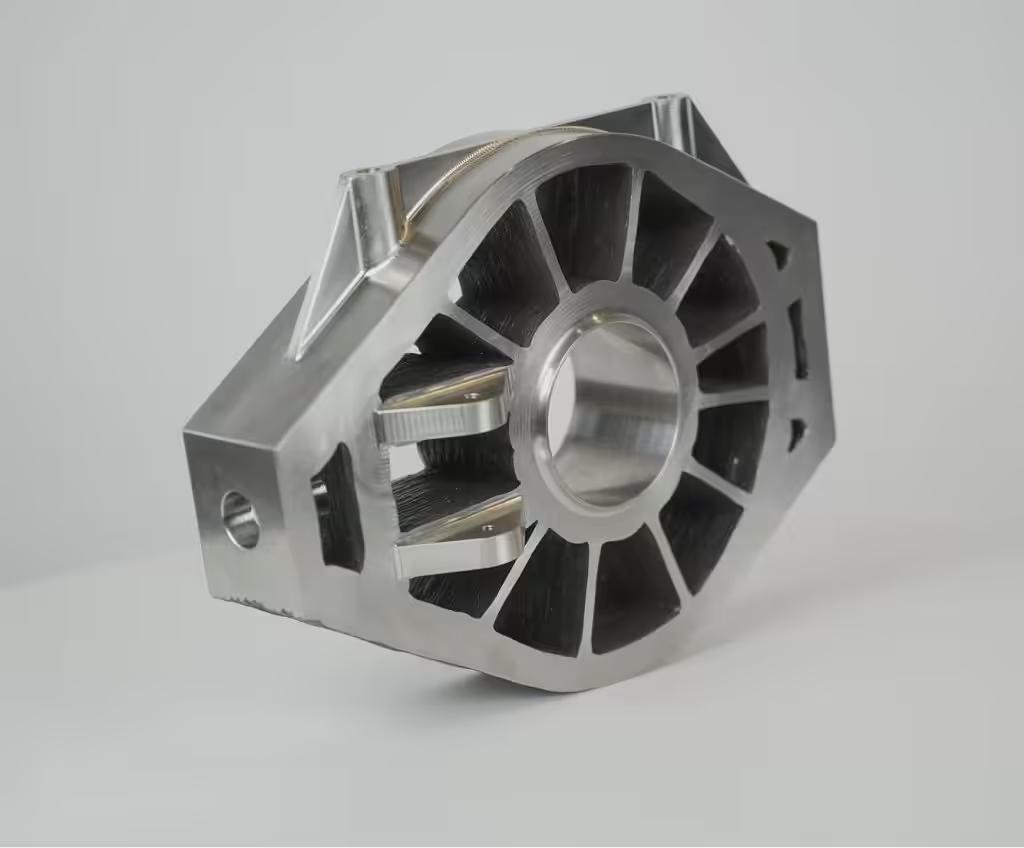
Key findings Legacy parts on demand: 3D printing lets manufacturers reproduce automotive spare parts directly from CAD or scan data. WAAM builds these structural or mechanical metal parts on demand in alloys such as stainless steel or Inconel. Days instead of weeks: An MX3D client needed a large steel fixture for a new EV assembly […]
How Does WAAM Material Compatibility Compare to Other 3D Printing Methods?
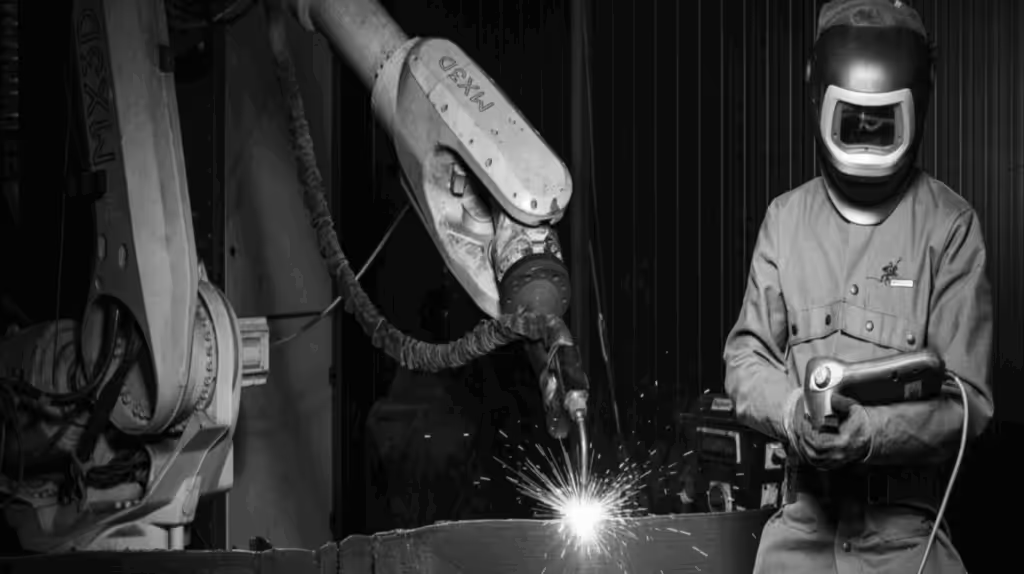
Key findings Standard welding wire: WAAM material compatibility rests on standard welding wire, which is widely available in dozens of alloy types and diameters. Examples include the stainless steels 316L and 308L and the nickel alloys Inconel 625 and 718. Cost-effective at scale: For parts over 500 mm, or even over a meter, WAAM is […]
How Do You Design Parts for Wire Arc Additive Manufacturing (WAAM)?
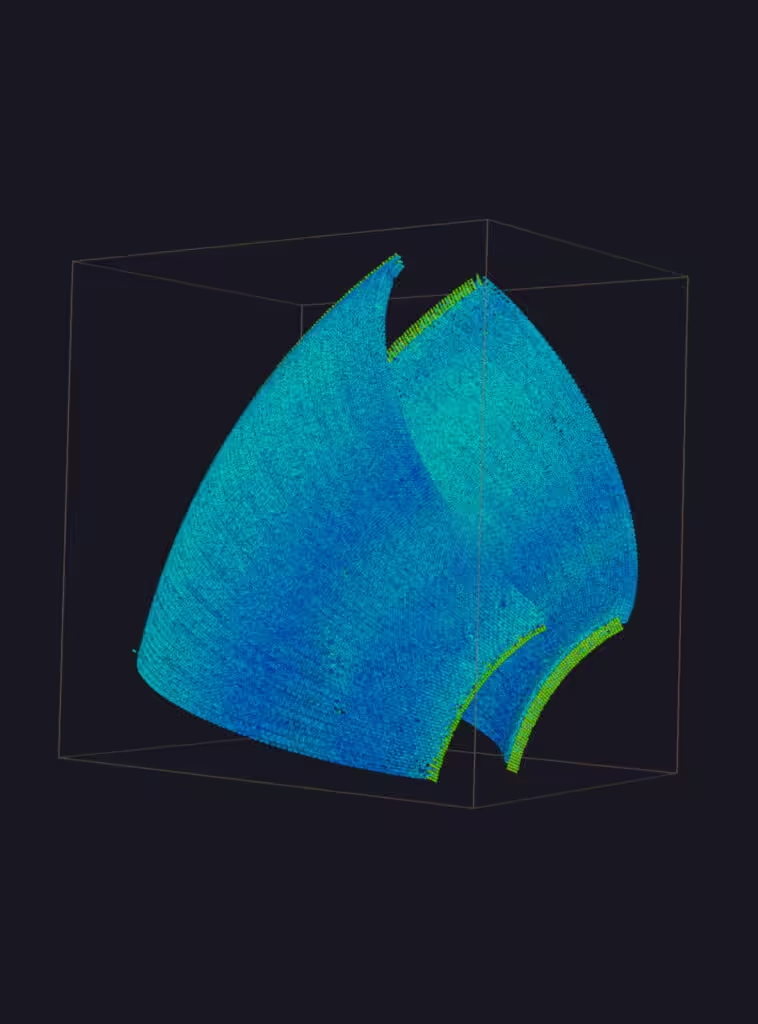
Key findings Wall thickness first: Design for WAAM starts with wall thickness: keep walls between 5 and 40 mm for best results. Avoid steep overhangs beyond about 30–45° unless the design includes support. Plan machining allowance: Plan for 1–3 mm of extra material in zones that will be machined, depending on material and geometry. The […]
How Accurate Is WAAM? Understanding Tolerances in Wire Arc Additive Manufacturing
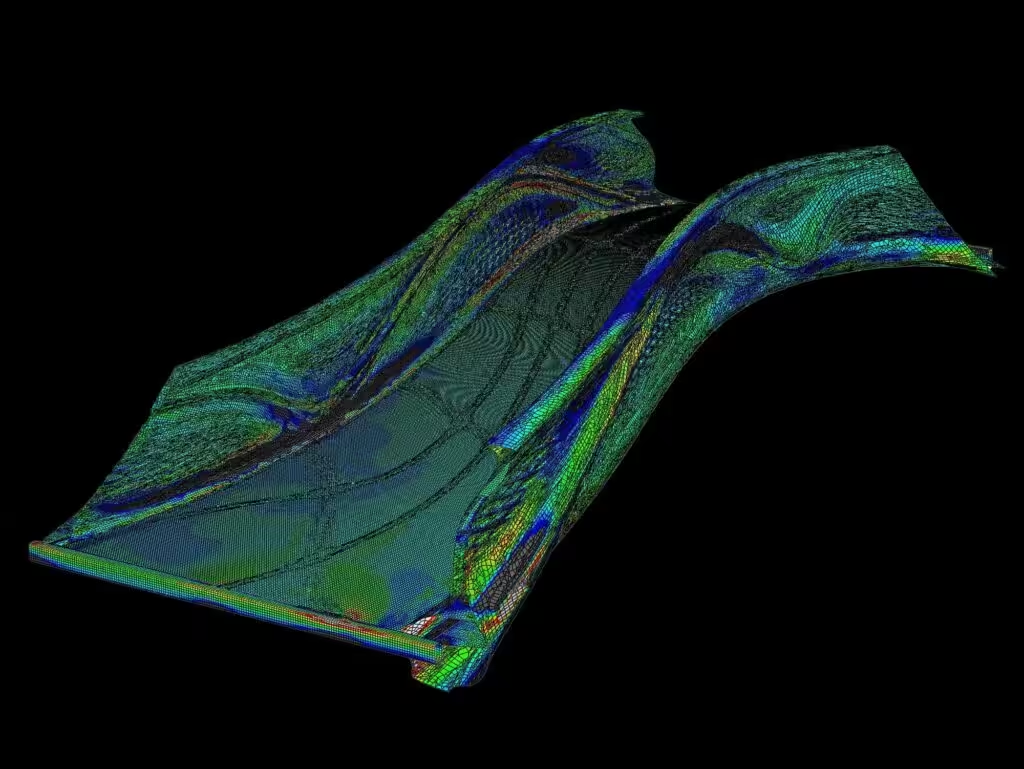
Key findings Typical as-printed accuracy: WAAM tolerances for as-printed parts are generally ±1 to 3 mm, depending on geometry, size and material. Flat features typically hold ±1 mm over 300 mm, and cylindrical features ±1.5 mm on diameter. Machined to final size: Allow 1–3 mm of extra material for finishing. After machining, material properties are […]
Can Additive Manufacturing Help Automakers Build Lighter, More Efficient Vehicles?
Key findings Lighter by design: Additive manufacturing helps automakers build lighter vehicles, with metal parts that can be 30 to 50 percent lighter than traditionally made ones [TBC]. Conventional versions are typically machined from billet or cast, which adds cost, tooling time and waste. No molds needed: WAAM builds parts layer by layer from welding […]
Lloyd’s Register awarded MX3D a certification for their directed energy deposition (DED-Arc) facility, incorporating the M1 Metal AM system
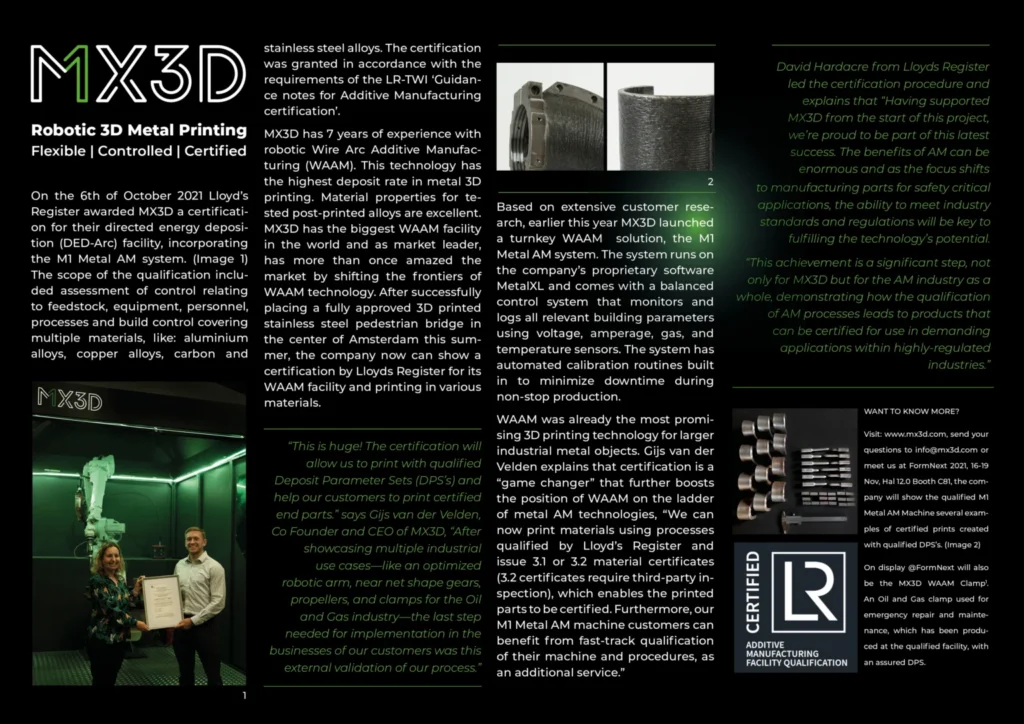
Contact MX3D today to explore WAAM solutions for your industry . Ready to use WAAM for Your Applications and Projects? Request a quote → Explore MX3D WAAM Systems → Order parts on demand →
Joris Laarman on MX3D and freedom of design
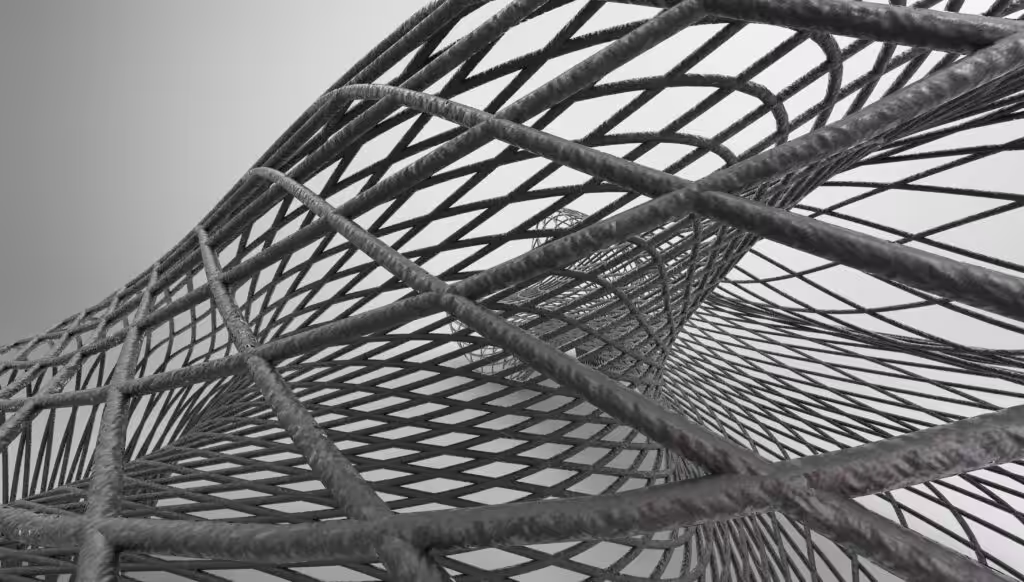
MX3D is a spinoff company of Joris Laarman Lab. Always pushing the boundaries of existing technologies and inventing new form languages, Joris Laarman will design the bridge. He spoke about the project, new craft, and his ambitions to our partner Heijmans and the BBC. When asked how MX3D came up with the idea to print […]